Two ceremonies, one weekend: planning a fusion wedding
A tea ceremony in the morning and vows under the trees in the afternoon. Fusion weddings are beautiful — and busy. Here's how to plan two ceremonies so the day flows.
 By LIT VOW Editorial7 min read
Key takeaways
- Decide what each ceremony means to each family before deciding the schedule.
- Choose a format: same day, same weekend or separate celebrations.
- Budget time for outfit changes, travel between venues and photos — they always take longer.
- Explain unfamiliar traditions to guests in writing, and tell each guest which parts they're invited to.
Start with what matters
Before the schedule, talk with both families about what each tradition means to them — and which moments are essential. You may find one family cares most about the tea ceremony, and the other about a church ceremony or a banquet. Those essentials shape everything else.
Three common formats
1. Same day
A morning tea ceremony (often after door games) and an afternoon Western ceremony, then one reception. Efficient and joyful, but long for the couple.
2. Same weekend
A tea ceremony and family lunch on Friday, the Western ceremony and reception on Saturday. More relaxed, and easier for photos and outfit changes.
3. Separate celebrations
Different dates — sometimes different countries — for each family’s traditions. Ideal when families live far apart.
A sample same-day timeline
- 9:00 AM — Door games at the bride’s home
- 10:00 AM — Tea ceremony (family)
- 11:30 AM — Lunch, rest and outfit change
- 2:30 PM — Guest arrival
- 3:00 PM — Western ceremony
- 4:00 PM — Cocktail hour and portraits
- 6:00 PM — Reception or banquet, with a second outfit change
Plan for outfit changes
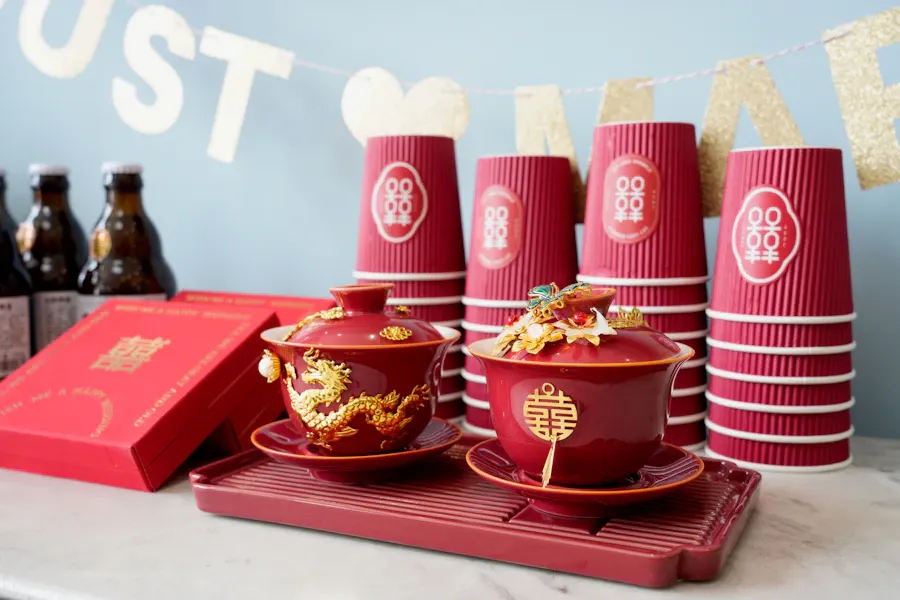
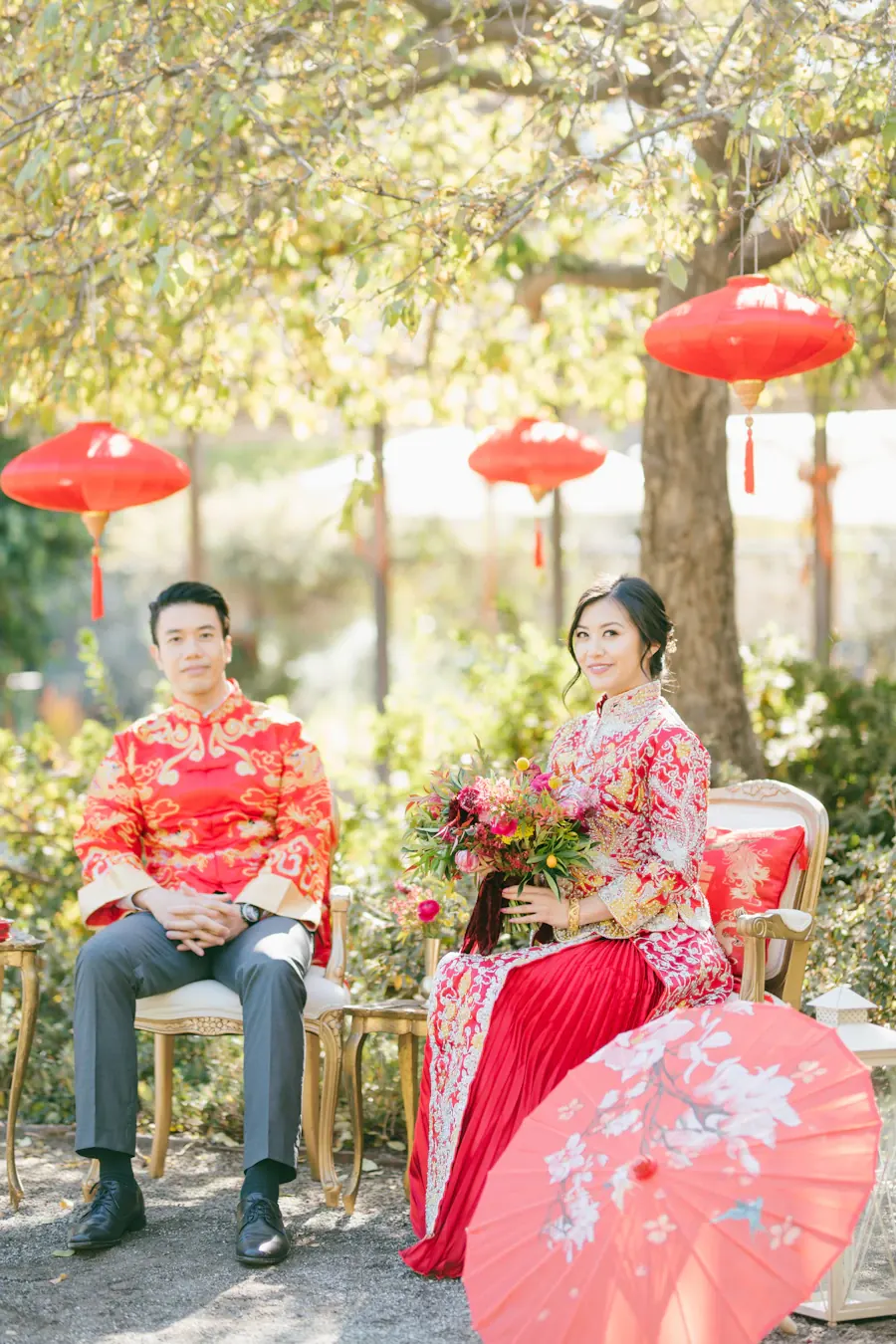
Fusion weddings often include several outfits: a qipao or 裙褂 (qun kwa) for the tea ceremony, a white gown for the Western ceremony, and sometimes a third for the banquet. Budget 30 to 45 minutes for each change, with a helper and a private room.
Blend traditions thoughtfully
- A tea ceremony for elders, with guests invited to watch if you wish.
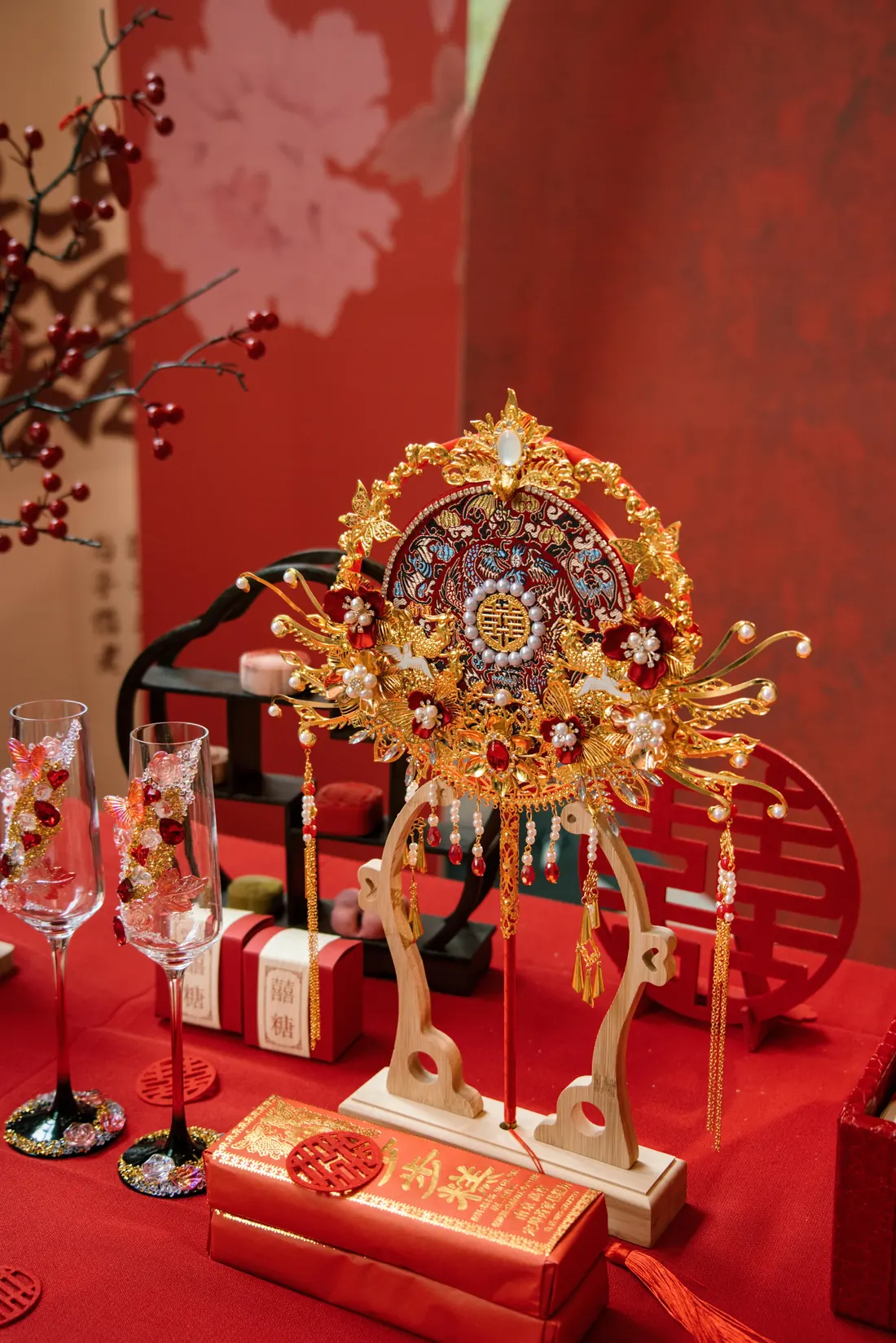
- Red and gold details alongside your wedding palette.
- Double happiness (囍) on signage, stationery or the cake.
- Bilingual vows or readings.
- A banquet-style dinner with a Western first dance.
Help every guest follow along
Guests from each side may be seeing the other’s traditions for the first time. In your wedding app or program:
- give each guest their own schedule — only the events they’re invited to;
- add a short explanation of each tradition;
- note dress code differences between events;
- write key details in both languages.
A LIT VOW app is designed around your traditions: one timeline for the whole weekend, Q&A for customs and dress codes, and a shared gallery so both families see every moment.
Frequently asked questions
Can you have two wedding ceremonies on the same day?
Yes. A common pattern is a family tea ceremony in the morning and a Western or civil ceremony in the afternoon, followed by one reception. Allow generous time for outfit changes and travel.
How long should a Chinese tea ceremony take in a fusion wedding?
It depends on how many elders are served. Allow about 45 minutes to an hour for immediate family, and more if many relatives take part.
How do you explain cultural traditions to wedding guests?
Add short explanations to your schedule and Q&A, in both languages if needed, and consider a line in the program or from the MC during the day.
LIT VOW Editorial writes about wedding planning, guest experience and cultural traditions for couples in Canada, the USA and around the world.