How much to give in a Chinese wedding red envelope (Canada & USA)
Guests at Chinese weddings often ask the same question: how much should go in the red envelope? Here's how the custom works in North America — and how couples can help guests feel at ease.
 By LIT VOW Editorial6 min read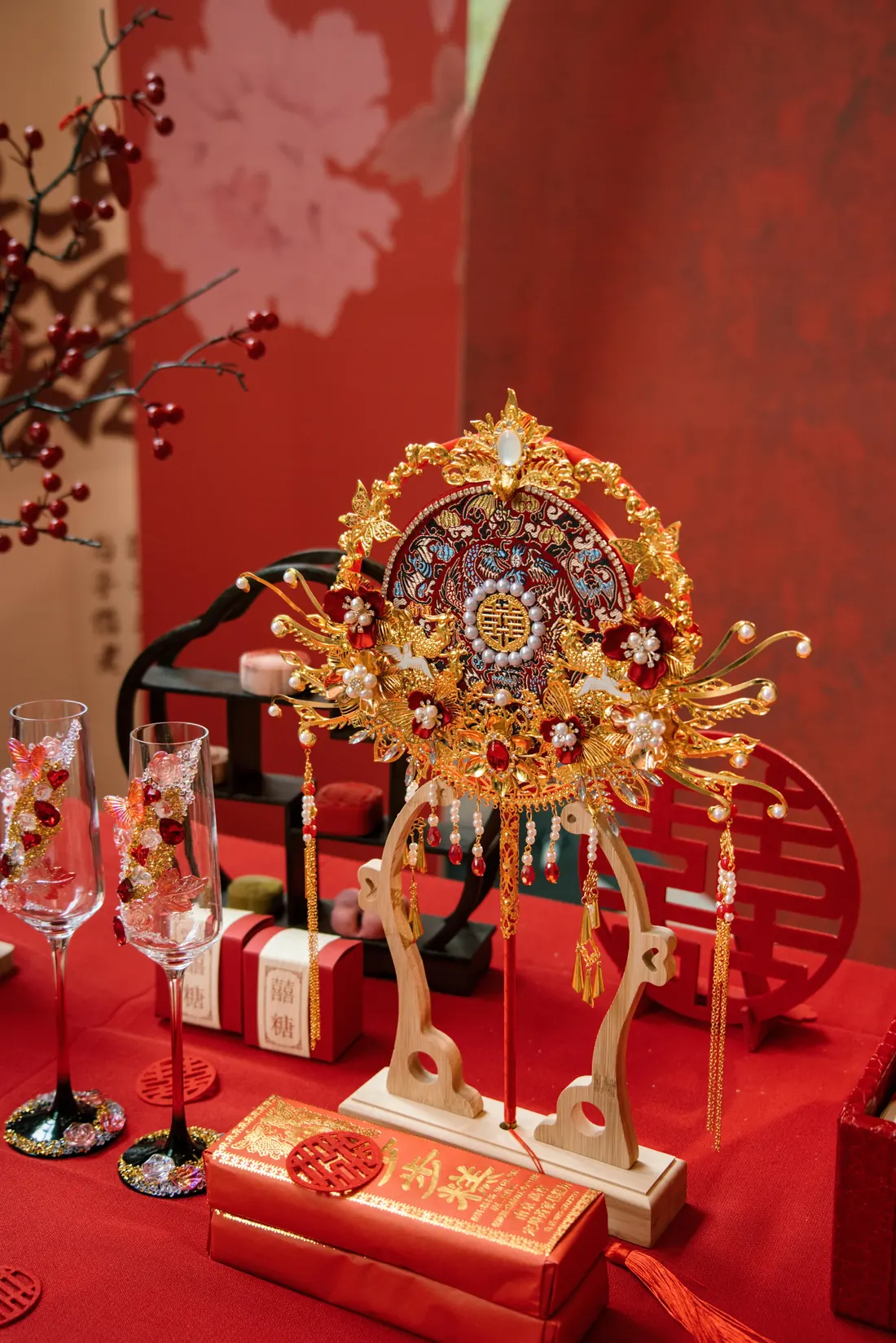
Key takeaways
- A red envelope (红包, hóngbāo) of cash is the traditional wedding gift at Chinese weddings.
- A common rule of thumb is to at least cover the cost of your seat at the banquet.
- Choose even, lucky amounts — eights and nines are popular — and avoid anything with a four.
- Couples can quietly help non-Chinese guests with a short, gracious note in their Q&A.
What is a wedding red envelope?
At Chinese weddings, the traditional gift is cash in a red envelope — 红包 (hóngbāo), or lai see in Cantonese. Red represents luck and joy. Guests give red envelopes at the banquet, and elders give them to the couple during the tea ceremony.
How much to give
There’s no single rule, and customs vary between families, regions and generations. The most common guideline is to at least cover the cost of your seat at the banquet. Guides written for weddings in North America commonly suggest ranges like these:
| Relationship | Commonly suggested range |
|---|---|
| Colleague or acquaintance | about $100–$200 |
| Friend | about $150–$300 |
| Close friend | about $300–$500 |
| Close family | $500 and up |
Treat these as a starting point, not a rule. If you’re unsure, ask a mutual friend or family member — it’s a normal question.
Lucky and unlucky numbers
Numbers matter as much as amounts:
- Even amounts are preferred — pairs represent the couple.
- Eight (八, bā) sounds like prosperity; nine (九, jiǔ) sounds like “long-lasting” — lovely for a marriage.
- Avoid four (四, sì), which sounds like the word for death — so skip $40, $44 or $400.
That’s why amounts like $168, $188, $288 or $388 are so common.
How to give it
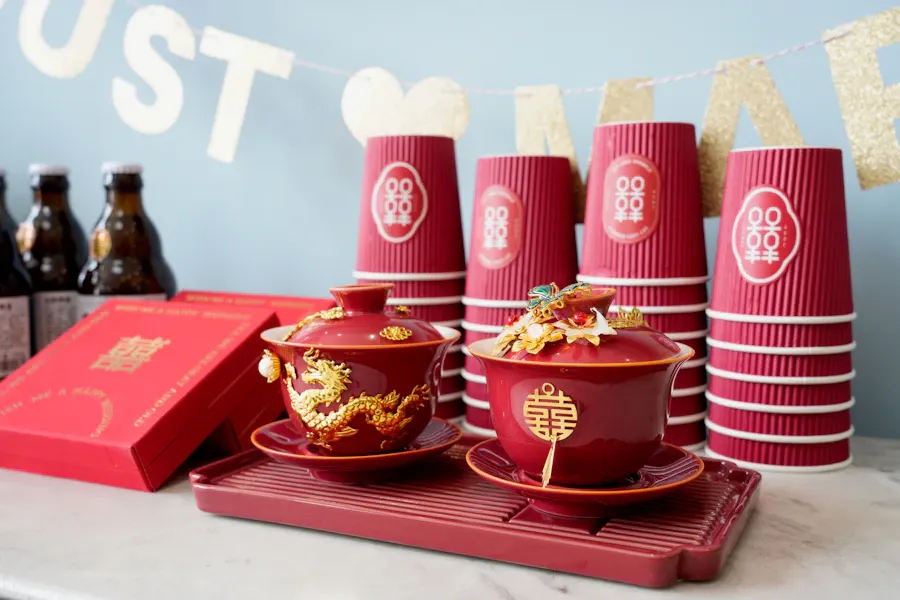
- Use a red envelope — often decorated with the double-happiness character 囍.
- New, crisp bills are a thoughtful touch.
- Write your name on the envelope; the couple’s family often keeps a record.
- Give it on arrival, at the sign-in table, with both hands.
If you can’t attend, it’s still customary to send a smaller red envelope with your best wishes.
For couples: help every guest feel comfortable
Many weddings bring together guests who’ve never attended a Chinese banquet. A short, gracious note removes any awkwardness:
“At Chinese weddings, a red envelope is a traditional gift — but your presence is truly gift enough. If you’d like to give one, there will be a card box at the sign-in table.”
Put it in your wedding app’s Q&A, alongside the dress code and what to expect at the tea ceremony, and write it in both languages if your families need it.
Sources
Frequently asked questions
How much money should you put in a Chinese wedding red envelope?
It depends on your relationship to the couple and local custom. North American guides commonly suggest roughly $100–$200 for acquaintances and colleagues, more for friends, and significantly more for close family — ideally at least covering the cost of your seat at the banquet.
What numbers should you avoid in a red envelope?
Avoid amounts containing the number four, which sounds like the word for death in Chinese. Even amounts are considered lucky, and eights and nines are especially popular.
When do you give the red envelope at a Chinese wedding?
Usually on arrival at the reception, at the sign-in or gift table. Write your name on the envelope and hand it over with both hands.
LIT VOW Editorial writes about wedding planning, guest experience and cultural traditions for couples in Canada, the USA and around the world.