The Chinese tea ceremony, explained for every guest
The tea ceremony is one of the most meaningful moments of a Chinese wedding. Here's what happens, why it matters, and how to help every guest follow along.
 By LIT VOW Editorial8 min read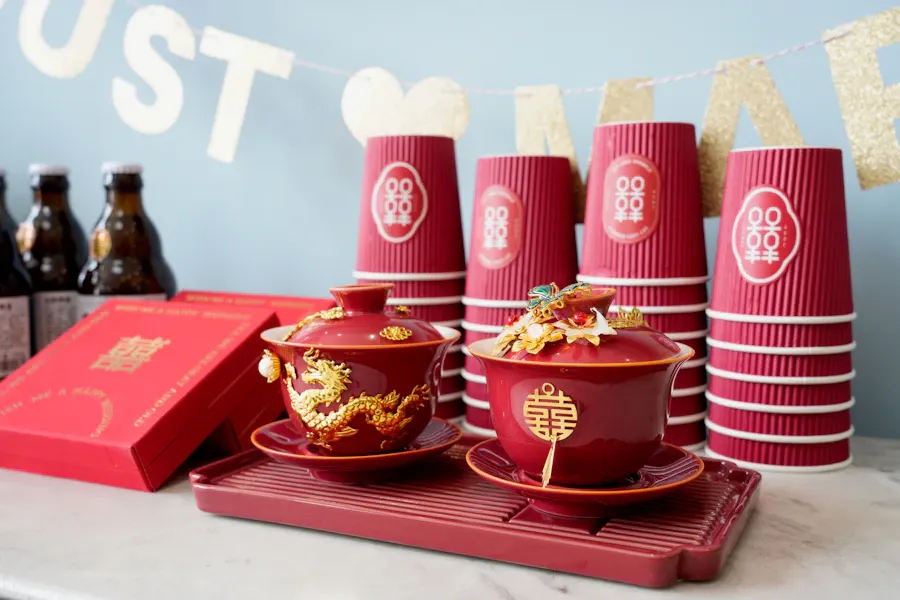
Key takeaways
- The tea ceremony (敬茶, jìng chá) is how a couple shows respect and gratitude to their parents and elders — and how two families formally welcome each other.
- Tea is usually served in order of seniority, starting with parents; each family decides its own order.
- Elders often reply with blessings and a red envelope (红包, hóngbāo) or jewellery.
- It's usually intimate — close family — so tell other guests when and where it happens, and whether they're invited to watch.
What is the Chinese tea ceremony?
The tea ceremony — 敬茶 (jìng chá), “respectfully offering tea” — is a ritual in which the couple serves tea to their parents and elders. It says thank you for raising us, and it marks the moment each family formally welcomes a new son or daughter.
Traditionally, the bride served tea to the groom’s family as she joined their household. Today most couples hold the ceremony for both families, and many Chinese-Canadian and Chinese-American couples combine it with a Western ceremony on the same weekend.
When does it happen?
There’s no single schedule — every family does it a little differently. Common patterns:
- The morning of the wedding, often after the groom’s party collects the bride (the playful “door games”), with tea served at one or both family homes.
- Before or after a Western ceremony, at the venue, in a quiet room set aside for family.
- At a separate family gathering a day or two before the wedding.
Whatever you choose, put it on your schedule with a time and place — even if only family attends — so everyone else knows why the couple is away.
Who serves whom, and in what order
The couple kneels or bows and offers tea with both hands, addressing each elder by their family title. Tea is usually served by seniority, most often beginning with parents, then grandparents, aunts and uncles, and older siblings. Some families begin with grandparents instead. Ask the eldest members of each family what they expect; it’s a lovely conversation to have before the day.
After drinking, elders usually give the couple a blessing and a gift — commonly a red envelope or gold jewellery, which the bride may wear for the rest of the day.
What’s in the cup
Many families serve a sweet tea, sometimes with red dates (红枣), lotus seeds (莲子) and longans (桂圆). The sweetness is a wish for a sweet marriage, and the ingredients carry wishes for a growing family. Others simply serve a favourite black or oolong tea. There’s no wrong choice — it’s about the gesture.
Red envelopes and gifts
A red envelope (红包, hóngbāo) is the traditional wedding gift at Chinese weddings, from elders during the tea ceremony and from guests at the banquet.
- Red and gold are the colours of luck and celebration.
- Even amounts are considered lucky; many families avoid amounts containing the number four, which sounds like the word for death.
- New bills are a thoughtful touch.
If your guests include people unfamiliar with the custom, a gentle note in your Q&A — “a red envelope is a traditional gift, but your presence is gift enough” — helps everyone feel at ease.
What guests should wear
For guests, festive formal wear is right. Two common courtesies:
- Avoid head-to-toe black or white, which some families associate with mourning.
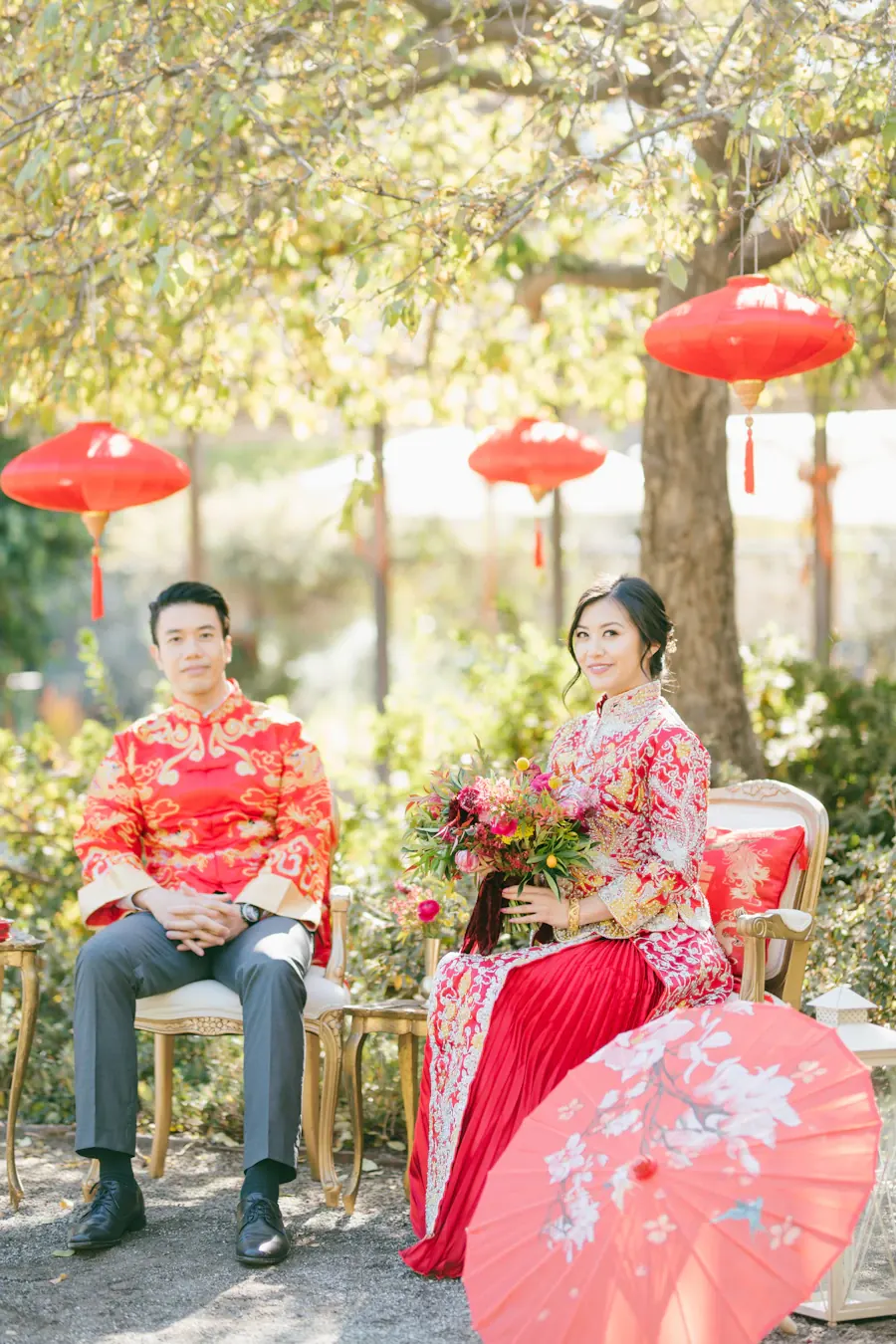
- Check with the couple before wearing red — it’s often the bride’s colour for the tea ceremony, when many brides wear a qipao or an embroidered 裙褂 (qun kwa).
How to explain it all to your guests
Multicultural weddings are at their best when nobody feels lost. A few lines in the right places make all the difference:
- On your schedule: list the tea ceremony with its time, place and who’s invited.
- In your Q&A: add “What is the tea ceremony?”, “Can we watch?” and “What should we wear?”
- In both languages: if grandparents read Chinese and friends read English, write the key details in both.
- With photos: after the day, let guests upload their shots so the family sees the ceremony from every angle.
A LIT VOW app brings all of this into one link — your schedule, your Q&A, your gallery and your messages — designed around your traditions and written in the languages your families read.
Frequently asked questions
Who attends a Chinese wedding tea ceremony?
Usually the couple, their parents, grandparents and close relatives. Some couples invite all guests to watch; others keep it private. Your wedding app or invitation should say which.
What should guests wear to a Chinese wedding?
Something festive and formal. Avoid head-to-toe black or white, which some families associate with mourning, and check with the couple before wearing red — it is often the bride's colour for the day.
How much should you put in a red envelope?
It depends on your relationship to the couple and local custom. Even amounts are considered lucky, and many families avoid amounts that include the number four, which sounds like the word for death.
LIT VOW Editorial writes about wedding planning, guest experience and cultural traditions for couples in Canada, the USA and around the world.